The new era of physical retail
Stores are becoming intelligent, integrated experiences.
Despite years of predictions that e-commerce would make physical stores less relevant, retailers continue to expand their physical presence. JLL1 recorded a 20% increase in notable store openings across Europe’s top seven cities in 2025, while other major European cities recorded a 39% increase. Greece is part of this momentum, from the new retail destinations taking shape at The Ellinikon2 to attica Department Stores’ €35 million investment plan through 2030, focused on expansion and customer experience3.
Physical retail is not simply growing again; its role is evolving. Experiential retail is becoming an increasingly important part of that evolution, with CBRE highlighting the rise of events, social experiences, fitness and F&B within retail environments4. Stores are becoming more than places to complete transactions. They are evolving into destinations where people can discover, interact, spend time and connect with brands.
This creates an important question for retailers: if the store is becoming an experience platform, how can every interaction within it become more relevant to the customer?
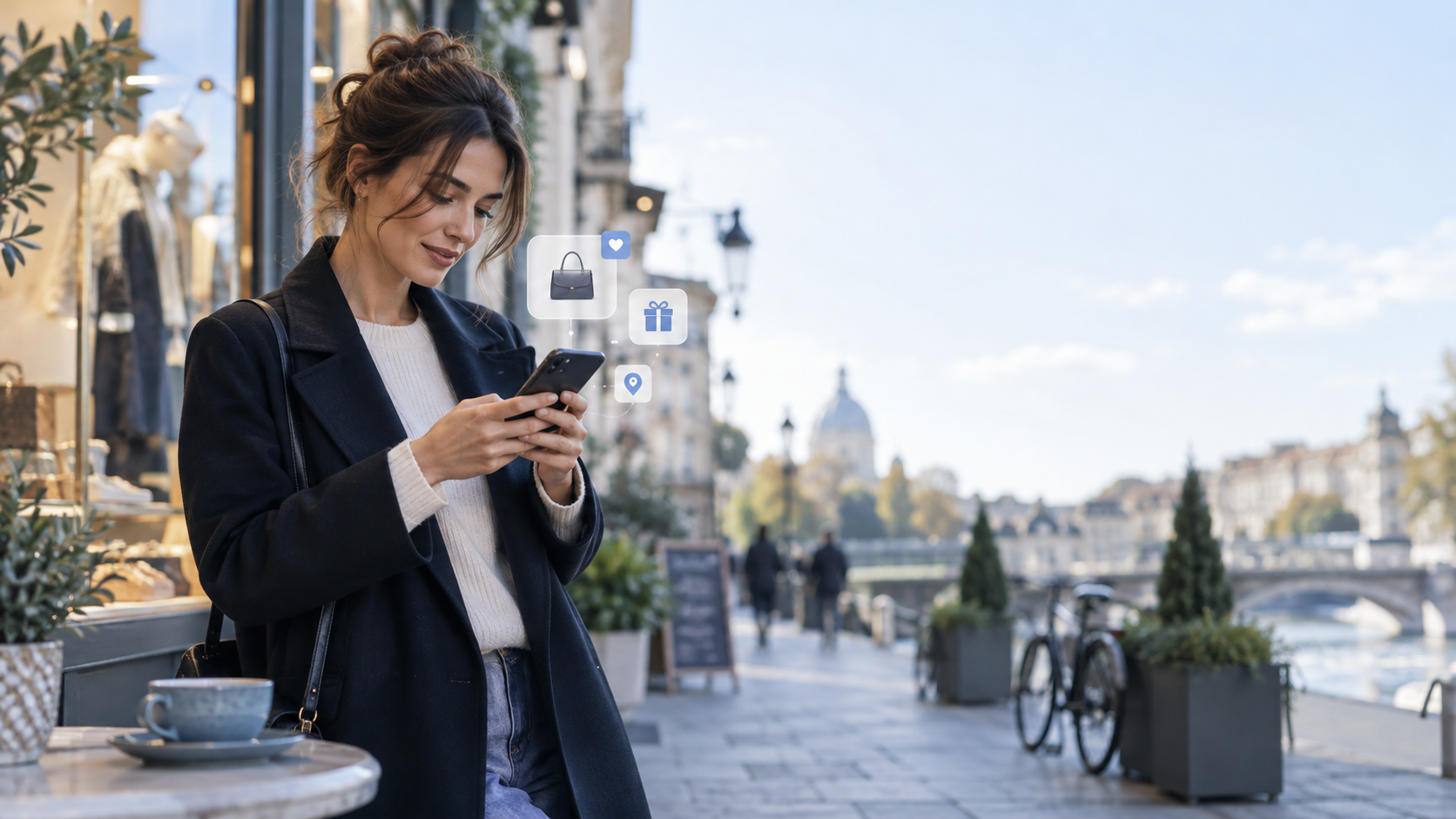
This is where personalization can move beyond digital channels and become part of the physical customer experience. Transaction history, preferences, behavioral patterns and even emotional cues can help retailers understand different audiences and adapt not only their communications, but the broader experience around them.
That experience can take many forms: a relevant mobile message before a visit, personalized content on digital screens, or audio and music adapted to a particular store, audience, time or commercial context. Customer intelligence can make physical experiences more relevant and personalized.
Location adds another layer of context. Macro Proximity enables engagement within a broader geographical area around a retail destination, while Micro Proximity brings that contextual capability inside the store or shopping center itself. Location can therefore become another valuable signal, helping retailers create more relevant and timely customer experiences.
This relationship between data and the physical experience works both ways. Customer intelligence can make the store experience more relevant, while the store itself can generate valuable new insights. In fact, CBRE identifies enhanced physical-store analytics as a major retail trend.⁴
Today, in-store analytics can go far beyond sales and footfall, revealing unique visitors, peak times, dwell time, audience profiles, customer journeys and behavioral patterns. This gives retailers a richer understanding of who visits, when they engage and how they interact with the physical environment.
Ultimately, smarter retail is about turning customer intelligence into better experiences and better business outcomes. By combining data, context, technology and the right expertise, brands can make interactions more relevant, strengthen engagement and loyalty, and create more opportunities to drive conversion and revenue.
With INTELIQUA’s expertise and the capabilities of Eliqua.CX platform, you can connect customer insight with action across physical and digital touchpoints, creating experiences that are not only more personal, but also more measurable and commercially effective.
Sources:
¹ JLL, Europe’s retail sector poised for continued growth in 2026, March 2026.
² The Ellinikon, Shopping Destinations.
³ ered.gr, attica unveils plans to expand retail footprint by 7,500 sqm.
⁴ CBRE, European Real Estate Market Outlook 2026 – Retail.
- Talk to our team to discover how smarter retail can drive both customer experience and business growth.